5 Questions to Ask Yourself Before Hiring a Web Designer
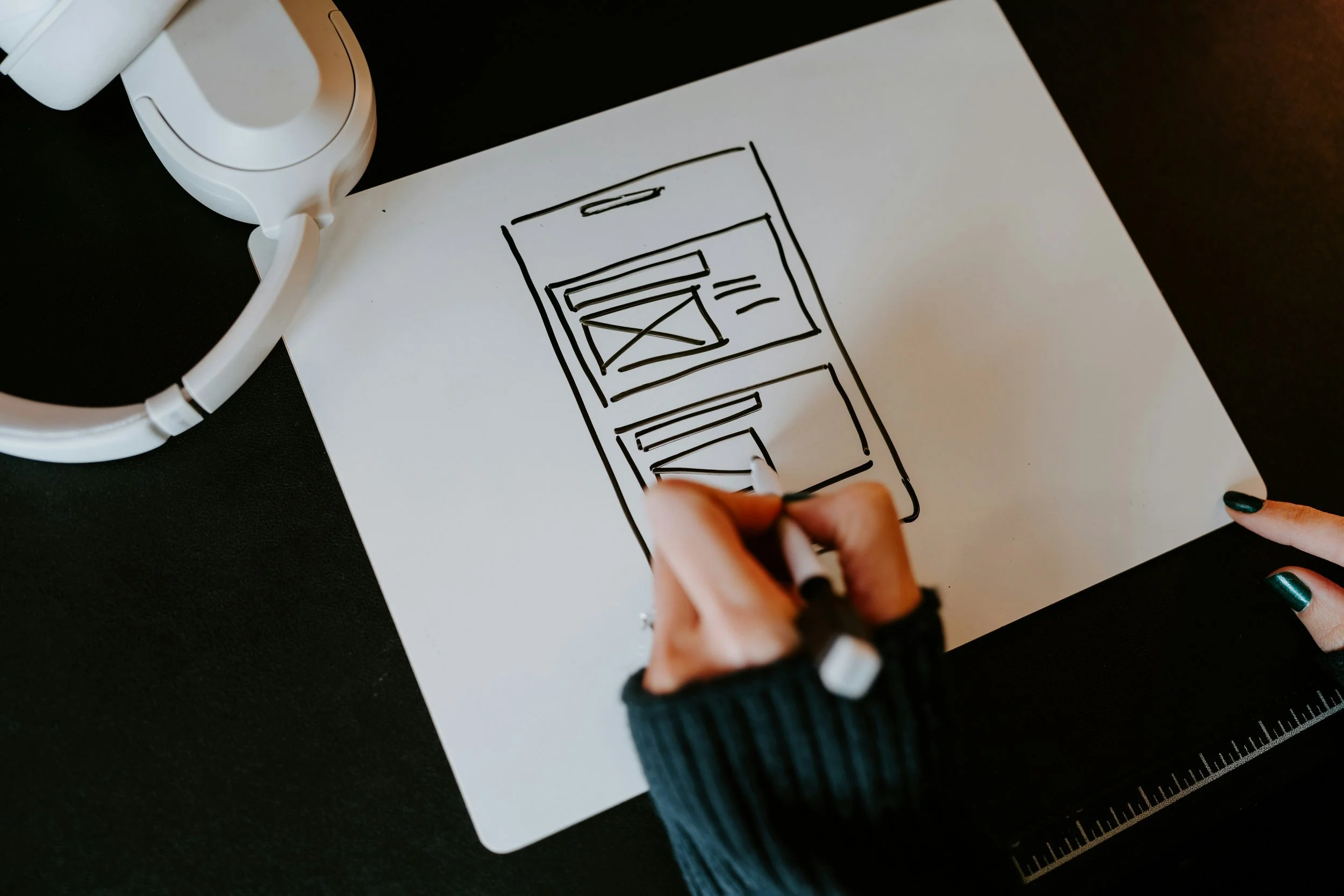
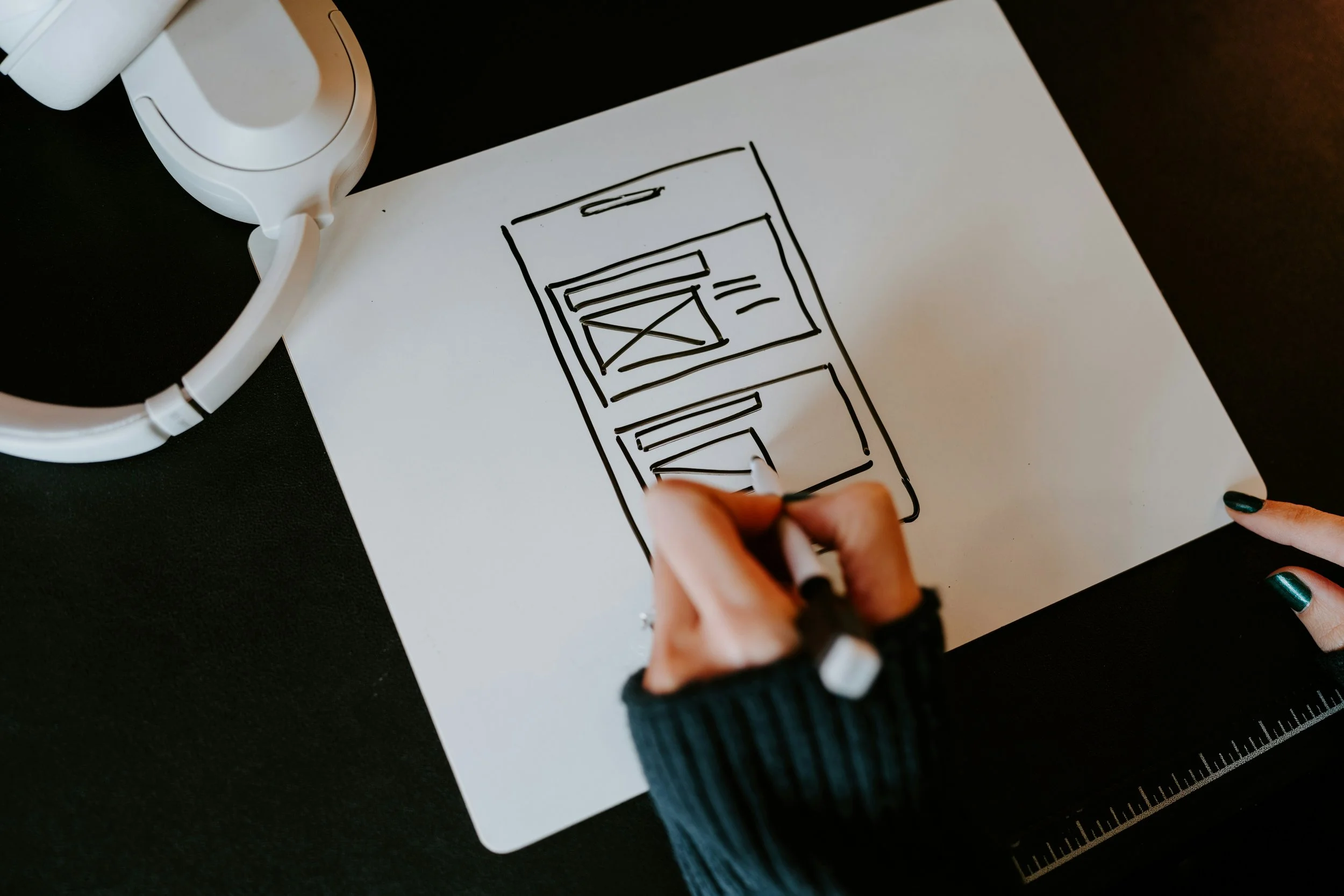
Web designer drawing a wireframe for a website design.
Hiring a web designer sounds pretty straightforward until you actually start looking for one.
Then suddenly you’re comparing designers who work on completely different platforms, offer wildly different packages, charge anywhere from a few hundred dollars to tens of thousands, and somehow all describe what they do as “custom web design.”
It can be really hard to tell what you actually need, especially if this is your first time investing in a professional website.
Before you start comparing portfolios, booking discovery calls, or falling in love with someone’s very cool Instagram feed, I think there’s a better place to start: your own business.
Because the right web designer for your business depends a whole lot on what you actually need them to build, how you want to use your website, and where you want your business to go.
So before you start sending inquiries, here are five questions I think every small business owner should ask themselves first.
1. What does your website actually need to do?
“I need a website” is a starting point, but it doesn’t tell us very much.
Do you need people to fill out an inquiry form? Book an appointment? Buy a product? Purchase a course or membership? Look through your portfolio? Understand a complicated service? Find your location? Trust you enough to pick up the phone?
Your website might need to do three of those things or all of them. The important part is figuring that out before you start shopping for a designer.
This also helps separate the things you actually need from the things that just seem cool. You might see another website with customer accounts, a custom quiz, elaborate animations, or some complicated interactive feature and think you need that too. Maybe you do. But every feature adds something to the scope, cost, or complexity of a website.
Start with the job your website needs to do for your business. A good web designer can help you figure out the best way to make that happen.
2. Who is actually going to use your website?
This one is very much the UX designer in me.
UX stands for user experience, which is basically the practice of thinking about how real people are going to interact with something. When it comes to your website, the person we should be designing around is your customer.
Think about why they landed on your website in the first place. What do they want to know? What questions are they trying to answer? What might make them hesitate before contacting you or buying? What information would make that decision easier?
This is also where I think small business owners can accidentally get a little too close to their own websites. You know your business inside and out. Your customer doesn’t.
Something that feels completely obvious to you might be the exact thing they’re hunting around your website trying to figure out.
And yes, your website should absolutely look good. I am a designer. I very much want it to look good. But if your customer leaves still wondering what you actually do, whether your service is right for them, or how the hell they’re supposed to work with you, we have a bigger problem than whether your font pairing is cool.
The best websites do both. They create a strong visual experience and make it incredibly easy for the right customer to understand what to do next.
3. Where is your business right now, and where is it going?
A business that has been around for ten years, knows exactly who its customers are, and has established services is in a very different position from a business that launched three months ago and is still figuring out what people actually want to buy.
That doesn’t mean a new business shouldn’t invest in a good website. It just means you probably don’t need to build every possible feature you might need three years from now.
Ideally, you want to keep things simple enough for what your business needs today while setting yourself up to scale when you’re ready.
Maybe you don’t need online booking yet, but you know it’s part of the plan. Maybe you’re starting with three services but eventually want to sell digital products. Maybe you’re a one-person business now but hope to grow into a team. Those are things worth talking about with your web designer before they start building.
A good designer should be thinking about both: what makes sense for your business right now and how your website can grow with you later.
That might affect the platform they recommend, how they structure the site, what functionality gets built now, and what can easily be added later. You don’t necessarily need to pay for the future version of your business today, but you also don’t want to rebuild your entire website a year from now because no one thought ahead.
When you’re talking with potential designers, tell them where your business is now and where you hope it’s going. You want to work with someone who can keep things appropriately simple today while having the skills to help you scale when you’re ready.
The goal isn’t to build the biggest website you can afford. It’s to build the right website for now, with somewhere to go next.
4. What do you want to happen after your website launches?
Your website is not going to stay exactly the same forever.
Your prices will change. You’ll get new photos. Your services will evolve. You might hire someone, stop offering something, add a new location, write a blog post, or decide six months from now that you really need a new page.
So what happens then?
Do you want to be able to log in and make those changes yourself? Are you happy to have an ongoing relationship with your designer or developer? Do you have room in your budget for website maintenance? How comfortable are you with technology?
There isn’t one correct answer. Some business owners would happily never touch the backend of their website again. Others want complete control the second the site launches.
But you should know what you want before choosing how your website is built.
I’ve talked to too many small business owners who spent thousands on websites they can no longer confidently update themselves. They’re no longer working with the original designer, they don’t have the budget to hire someone every time something changes, and eventually the website just stops evolving with the business.
I have a whole separate rant about this when it comes to WordPress, because sometimes we’re making a small business website way more complicated than it needs to be.
Read: Why I Hate WordPress for Most Small Business Websites →
5. What are you actually hiring a web designer for?
This might sound like a weird question. Obviously, you’re hiring them to design a website.
But “web designer” is a surprisingly broad job title.
Some web designers are incredibly technical. Some are heavily focused on aesthetics and visual trends. Some specialize in conversion. Some come from branding. Some are developers who also design. And some, like me, come from a UX background and spend a slightly concerning amount of time thinking about what your customer is going to click on next.
There’s also a ton of overlap between those categories. A designer can be incredibly creative and strategic. Someone can understand development and UX. A brand designer might also build fantastic websites.
The point isn’t that there’s one type of web designer you should hire. It’s that different designers bring different strengths to the table.
Think about what you actually need help with.
If you already have an established brand but need complicated functionality, your priorities might be completely different from a business that needs help translating its personality into a website for the first time. Maybe you need someone who can help you untangle your customer journey. Maybe your biggest problem is that your current website doesn’t feel remotely like your business anymore. Maybe you need all of the above.
So when you’re looking through portfolios, don’t just ask yourself, “Do I like this?”
Ask yourself, “Is this person good at the thing I actually need help with?”
That’s a much better way to choose someone you’re about to trust with a pretty important part of your business.
And yes, I have a whole article coming about the different types of web designers and how to figure out which one makes sense for you.
Before you hire your web designer...
You don’t need to have every page mapped out, know exactly what platform your website should be built on, or show up to a discovery call with a perfectly organized plan. Helping you figure that stuff out is part of the job.
But you should have a sense of what you need your website to accomplish, who needs to use it, where your business is now, where you’d like it to go, and how involved you want to be once the site launches.
That gives you a much better way to evaluate a designer than simply choosing the portfolio you think looks the coolest.
Because you’re not just hiring someone to make you a pretty website. You’re hiring someone to build a tool your business is hopefully going to use for years.
You want someone who understands what you need today, can think a few steps ahead, and knows how to build something that works just as well as it looks.
Looking for a web designer for your small business?
That balance is exactly how I approach custom website design at Chartreuse Studio. I combine brand-forward design with a UX mindset to create Squarespace websites that feel like your business, make sense to your customers, and are built with where you’re going next in mind.
We’ll figure out what your website actually needs to do, what it doesn’t need to do, and how to build it in a way that you can actually manage once it’s yours.
Explore Custom Squarespace Website Design →
This article is part of The Small Business Guide to Hiring a Web Designer, where I’m breaking down the things I think small business owners should understand before spending thousands of dollars on a website.